Market Insights · Cold chain & occupier guides
Sourcing Cold Chain & Temperature-Controlled Facilities in the Klang Valley
Your next cold chain facility in Malaysia should protect your stock and support your launch plan. For food, beverage and pharmaceutical occupiers, an existing temperature-controlled warehouse in the Klang Valley can offer a practical alternative to funding a conversion from an empty shell.
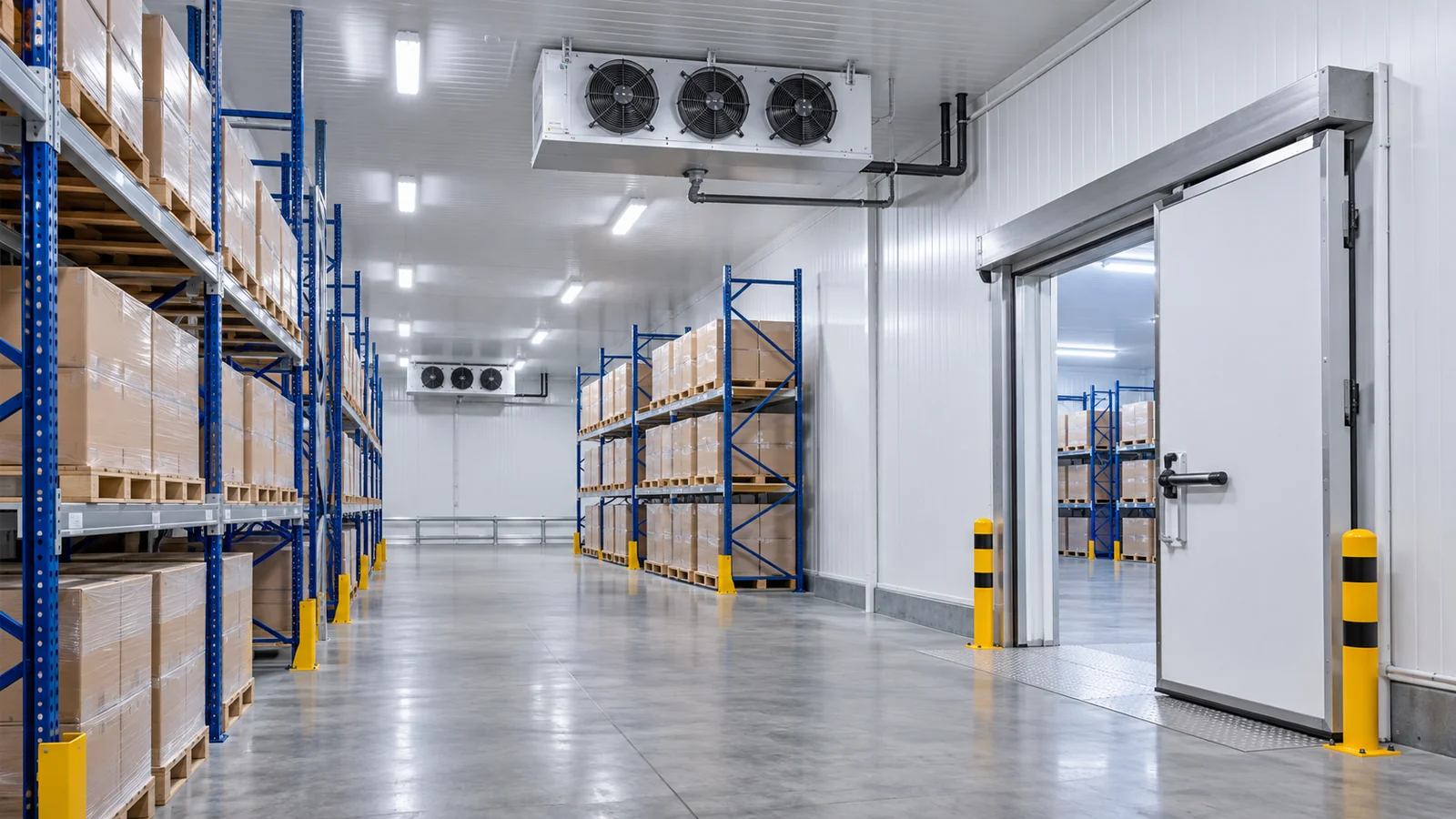
1. Define the temperature and handling brief first
A cold room is useful only when it suits the stock moving through it. Start your search with the required temperature band, peak pallet count, inbound product temperature and daily dispatch volume. Include receiving, picking, packing and loading conditions: a refrigerated store does not resolve exposure elsewhere in the workflow.
For FMCG cold storage, separate chilled, frozen and other controlled-temperature products in your brief. Food and beverage lines can have different storage needs, while pharmaceutical products must follow their specified conditions. Ask for any humidity or segregation requirements to be assessed alongside temperature.
- Product: commodity, packaging, batch and expiry controls, and any halal or pharmaceutical requirements.
- Capacity: average and peak pallets or CBM, pallet dimensions, stock dwell time and growth allowance.
- Throughput: daily receipts and orders, container arrivals, dispatch windows and weekend operations.
- Timing: target inbound month, required contract term and phased occupation if useful.
Reference: NPRA: Guideline on Good Distribution Practice, 3rd edition ↗
2. Understand what sits behind a cold-storage retrofit budget
Converting a standard warehouse into cold storage is a capital project. The budget can extend well beyond refrigeration equipment to the building envelope, electrical works and commissioning. That makes a low shell rental an incomplete basis for comparison.
Ask a qualified project team to price the works against your actual operating brief. Insulation and vapour-control details, doorway traffic and the handling of incoming goods influence the design. Freezer floors may need specific frost-protection measures. These engineering considerations help explain why two buildings of the same floor area can have very different conversion requirements.
- Insulated walls and ceilings, sealed junctions and appropriate cold-room doors.
- Floor build-up, insulation and frost protection where the freezer design requires it.
- Refrigeration plant, controls, defrost arrangements and maintenance access.
- Electrical works and the resilience arrangements specified for the operation.
- Loading interfaces, pallet layout, monitoring and commissioning.
Reference: ASHRAE: Refrigerated-Facility Design ↗
3. Compare existing facilities with a bespoke conversion
An existing temperature-controlled warehouse in the Klang Valley gives you installed infrastructure to assess at the outset. A managed cold-chain 3PL can also provide handling and operating capability under one service proposal. Both are worth comparing before committing capital to a new fit-out.
An existing installation can shorten the route to occupation, but readiness depends on its condition and suitability. Request the operating temperature capability, usable pallet count, plant maintenance history and handover scope. Establish who pays for repairs, electricity, refrigerant servicing and reinstatement. Confirm the actual occupation date rather than treating installed cold rooms as proof of immediate availability.
| Option | What you gain | What to establish |
|---|---|---|
| Existing cold-storage lease | Installed rooms and equipment to inspect | Condition, usable capacity, maintenance obligations and handover timing |
| Managed cold-chain 3PL | Storage and handling services in one proposal | Service scope, available capacity, stock controls, minimum charges and SLA |
| Standard warehouse conversion | A layout designed around your operation | Landlord consent, engineering feasibility, project budget and delivery programme |
4. Build a Klang Valley shortlist around your stock movements
Start with Shah Alam, Bukit Raja, Klang and Port Klang as search areas, then compare the exact premises against your transport lanes. For imported food or frozen cargo, test terminal-to-store movements and receiving arrangements. For supermarket, restaurant or e-commerce replenishment, compare outbound delivery routes and dispatch cut-offs.
For airfreight-dependent stock, include the KLIA–Sepang corridor in the assessment. Evaluate the full journey from cargo collection to controlled storage and final delivery. A locality name alone cannot establish journey time, temperature performance or available capacity; use the same delivery brief when comparing proposals.
5. Check the refrigeration system and operating responsibilities
Searching for ammonia or freon-based cold storage? Include that preference in your enquiry, then ask for the exact refrigerant and system specification. Freon™ is a brand covering multiple refrigerants, so the label alone is insufficient to compare equipment or servicing requirements.
For an ammonia installation, request a qualified review of the plant and its safety-management arrangements. DOSH publishes Malaysian guidance specifically for ammonia refrigeration. Establish maintenance responsibility, operating support and emergency procedures before agreeing commercial terms.
For every shortlist, ask how the installation handles an outage, equipment failure or temperature excursion. Identify what the backup arrangement actually supports and how stock would be protected during recovery. Your engineer and operating team should assess these provisions against your products and throughput.
Reference: Chemours: Freon refrigerant products ↗ · DOSH: chemical-management guidelines, including ammonia refrigeration ↗
6. Verify halal and pharmaceutical suitability at the selected premises
For halal cold chain logistics, request the current certification and check its premises and service scope through the Malaysian Halal Directory. Discuss segregation, cleaning, traceability and handling arrangements with the proposed operator. Neither a cold-room installation nor a location in a halal-focused park establishes certification for your operation.
For pharmaceutical stock, request temperature-mapping records, calibrated monitoring, excursion alerts and a tested contingency plan. NPRA’s GDP guidance and supplementary notes address these controls for time- and temperature-sensitive products. A food cold room should not be assumed suitable for pharmaceutical distribution.
For importing or wholesaling pharmaceutical time- and temperature-sensitive products (TTSP), check that the licence authorises TTSP handling and the proposed premises or store has satisfactory Cold Chain Facility Inspection (CCFI) status. NPRA’s current licensing FAQ explains that, from 2026, the TTSP condition is crossed out by default where satisfactory CCFI status is absent. NPRA does not issue GDP compliance certification; request the underlying inspection and licensing evidence rather than relying on a generic ‘GDP-certified’ description.
Reference: JAKIM: Malaysian Halal Directory status check ↗ · NPRA: Guideline on Good Distribution Practice, 3rd edition ↗ · NPRA: supplementary notes on time- and temperature-sensitive products ↗ · NPRA: licensing FAQs and cold-chain facility inspection ↗ · NPRA: GDP inspection FAQs ↗
7. Turn your operational brief into a cold-chain shortlist
Use WarehouseSpace.my to compare cold-storage and temperature-controlled listings alongside managed logistics facilities. Share your temperature range, pallet requirement, cargo type, preferred location and target start month so our commercial desk can focus the search.
Searching for ammonia or freon-based cold storage? Contact our commercial desk for off-market temperature-controlled facilities. We can review potential leasing or managed-storage options against your brief and coordinate facility discussions, with capacity, specifications and terms checked for the proposed match.
Questions before you enquire
Is it better to lease existing cold storage or convert a normal warehouse?
Compare the complete project and operating cost. Existing cold storage can reduce the scope of new installation, subject to its condition and suitability. A conversion offers layout flexibility but requires an engineering assessment, landlord agreement, works budget and delivery programme.
Can one cold chain facility handle food and pharmaceutical products?
Temperature capability alone is insufficient. Check each product’s storage conditions, segregation, operating procedures and applicable approvals. For pharmaceutical distribution, review GDP compliance evidence, relevant licence conditions and Cold Chain Facility Inspection status where applicable.
Does a halal park address establish halal cold chain certification?
No. Verify the current certification for the proposed premises and services, then review the handling arrangements for your products. Use the Malaysian Halal Directory to check certification information.
What should I send when requesting cold storage in the Klang Valley?
Provide the product and temperature range, average and peak pallet or CBM requirement, receiving and order volumes, handling scope, preferred locations, certification needs, start month and contract term. Include any refrigeration-system preference.
Sources and scope
Official sources checked on 11 November 2026. Engineering and regulatory sources inform the selection checks in this guide. Verify the selected premises, product requirements, certification scope and current capacity before committing.
- ASHRAE: Refrigerated-Facility Design ↗
- NPRA: Guideline on Good Distribution Practice, 3rd edition ↗
- NPRA: supplementary notes on time- and temperature-sensitive products ↗
- NPRA: licensing FAQs and cold-chain facility inspection ↗
- NPRA: GDP inspection FAQs ↗
- JAKIM: Malaysian Halal Directory status check ↗
- Chemours: Freon refrigerant products ↗
- DOSH: chemical-management guidelines, including ammonia refrigeration ↗
Explore the relevant locations
Klang Valley warehouse and logistics guide · Shah Alam warehouse and logistics guide · Port Klang warehouse and logistics guide · KLIA & Sepang warehouse and logistics guide
Compare direct leases and managed facilities · Explore 3PL facilities
Continue your market research
 Johor · Singapore
The Johor-Singapore Special Economic Zone (JS-SEZ): Warehousing and Cross-Border Fulfillment
Johor can support a Singapore inventory strategy when storage, border movements and delivery commitments are planned together. Compare warehouse locations, direct leasing and managed fulfillment using the same operational brief.
Read the guide ↗ Malaysia · Port Klang
Malaysia Free Zones: FCZ and FIZ Warehouse FAQs
Find the right customs setting for your Malaysian warehouse operation. Use this practical guide to compare free commercial and free industrial zones, check the actual premises and prepare a focused property or 3PL brief.
Read the guide ↗ Klang Valley
Shah Alam vs. Port Klang: Which Logistics Hub is Right for Your FMCG Supply Chain?
Choosing a warehouse starts with understanding where your stock arrives and where your orders go. This practical comparison helps FMCG businesses assess Shah Alam and Port Klang through transport, handling, storage and service requirements.
Read the guide ↗From insight to a shortlist
Find cold storage that fits your operation
Searching for ammonia or freon-based cold storage? Contact our commercial desk for off-market temperature-controlled facilities. Share your brief below to assess existing cold-storage leases or managed 3PL capacity in the Klang Valley.
Need a facility that meets these operational and compliance requirements? Submit your brief so our corporate desk can assess suitable 3PL partners or leasing options, including off-market opportunities where available. Capacity, compliance evidence and commercial terms are checked for the proposed match.
The Smart Enquiry Form loads here when JavaScript is enabled. You can also send your requirements to our corporate desk.